Thursday, May 28, 2015
Rangefinder Camera by Lisa Matrale
A rangefinder camera is a focusing mechanism that allows the photographer to measure the subject distance and take photographs that are in sharp focus. They are a sub-division of mirrorless cameras that have been around for many many years. In order to focus a rangefinder, you need to look through the viewfinder and first pay attention to the frame lines for your equivalent focal length. Once you find those, you’ll want to look at the center of the image where there is a little square or circle depending on what type of camera you own. As you focus your lens, you’ll see the middle area change. To get the camera focused, you’ll need to line up what you see with the center image. Rangefinders have remained popular in certain circles like street photographers and photojournalists looking for a low profile and stealth approach to their work.
Normal Lens
Normal lens-
Lens reproduces a field of view with normal viewing conditions
telephoto lens
telephoto lens is a specific type of long focus lens which the physical length of the lens is short than the focal length. the is achieved my incorporating a special lens group known as the telephoto group that extends the right path to create a long focus lens in a much shorter overall design.
telephoto lenses are sometimes broken into the further sub-types of medium telephoto: lenses covering between a 30° and 10° field of view
A telephoto lens works by having the outermost (i.e. light gathering) element of a much shorter focal length than the equivalent long-focus lens and then incorporating a second set of elements close to the film or sensor plane that extend the cone of light so that it appears to have come from a lens of much greater focal length.
Digital Sensor - Sabrina
The soul of a digital camera is its sensor—to determine image size,
resolution, low-light performance, depth of field, dynamic range,
lenses, and even the camera’s physical size, the sensor is key.
An image sensor is a solid-state device, the part of the camera’s
hardware that captures light and converts what you see through a
viewfinder or LCD monitor into an image. Think of the sensor as the
electronic equivalent of film. With film cameras, you could choose from
hundreds of film brands, each with its own unique and identifiable
characteristics. With digital cameras, much of that technology is built
into the hardware, and you can apply special filmlike effects later with
software.
Your camera’s sensor determines how good your images look and how
large you can scale them or print them. Image quality depends not
only on the size of the sensor, but also on how many millions of pixels
(light-sensitive photosites) fit on it, and the size of those pixels.
The sensor size also affects what you see through the viewfinder—the
relationship between what you’re shooting and what actually gets
recorded in the frame and passed through to the memory card. Smaller
sensors apply a crop factor to lenses, capturing less of the scene than
full-frame sensors do. The full-frame reference point is always
traditional 35mm film.
Differences between CCD and CMOS
https://www.teledynedalsa.com/imaging/knowledge-center/appnotes/ccd-vs-cmos/
- CCD (charge-coupled device) and CMOS (complementary metal-oxide semiconductor;
- Through micro-cells, they convert light into electrons;
- CCD create high-quality, low-noise images;
- CMOS tend to be more susceptible to noise;
- CMOS consumes little power; whereas CCD uses lots of energy;
- CMOS is cheap (the silicon employed for its production is cheap and available in different qualities);
- CCD is more expensive;
- CCD for high-quality pictures; CMOS for lower-quality resolution and lower sensitivity images.
Wednesday, May 27, 2015
Emy- Post Production Programs
Post.-production is part of filmmaking, video production and photography process. It occurs in the making of motion pictures,television programs, radio programs, advertising, audio recordings, photography, and digital art. It is a term for all stages of production occurring after the actual end of shooting and/or recording the completed work.
Traditional (analogue) post-production has been eroded away by video editing software that operates on a non-linear editing system (NLE).
Photography
Professional post-producers usually apply a certain range of image editing operations to the raw image format provided by a photographer or an image-bank. There is a range of proprietary and free and open-source software, running on a range of operating systems available to do this work. All computer hardware suitable for the post-production of photography features high amounts of RAM. The CPU (and GPU of the software supports GPGPU) depends on the operations to be performed.
The first stage of post-production usually requires loading the RAW images into the post-production software. If it's more than one image, and they belong to a set, ideally post-producers try to equalize the images before loading them. After that, if necessary, the next step would be to cut the objects in the images with the Pen Tool for a perfect and clean cut. The next stage would be cleaning the image using tools such as the healing tool, clone tool and patch tool.
The next stages depend on what the client ordered. If it's a photo-montage, the post-producers would usually start assembling the different images into the final document, and start to integrate the images with the background.
In advertising it usually requires assembling several images together in a photo-composition.
Types of work usually done:
- Advertising that requires one background (as one or more images to assemble) and one or more models. (Usually the most time consuming as a lot of times these are image bank images which don't have much quality, and they all have different light and color as they were not controlled by only one photographer in one set location)
- Product-photography that usually requires several images of the same object with different lights, and assembled together, to control light and unwanted reflections, and/or to assemble parts that would be difficult to get in one shot, such as a beer glass for a beer advertising. (Sometimes to composite one image of a beer glass it requires 4 or 5 images: one for the base, one for the beer, one for the label, one for the foam, and one or more for splashing beer if that is desired)
- Fashion photography that usually requires a really heavy post-production for editorial and/or advertising.
Tuesday, May 26, 2015
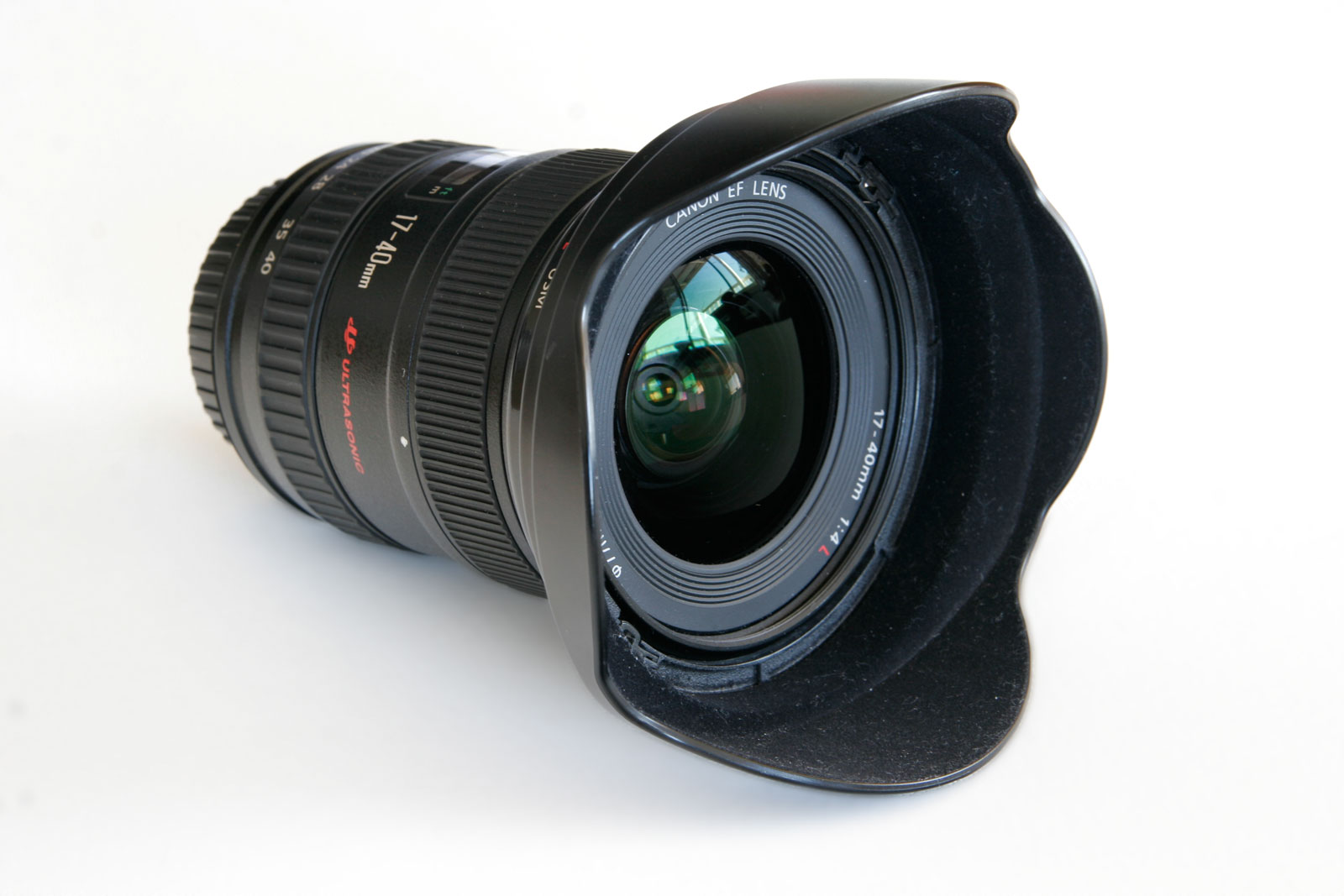
Wide angle lens - Jessica
What is a wide angle lens?
- It is used to take pictures of a large scene, a smaller scene with a minimum amount of space, or to have a “close-to-subject” perspective to make it seem that the viewer is in the presence of the photo.
- It can also be used for landscapes, architecture, and interior photography (such as the insides of buildings or cars).
- They also can be used to distort the depth and size of the photo.
Erich Hartmann
FRANCE. 1945. U.S. soldiers heading home on a transport train.
black and white
military topic
soldiers
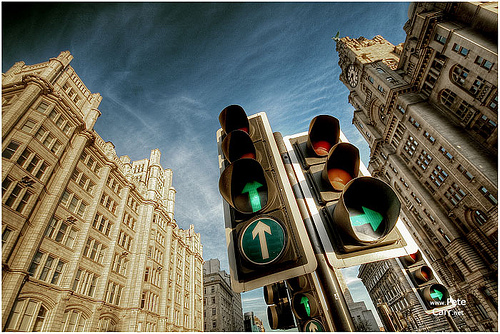
Peter Marlow by Lisa Matrale
This picture was taken in Galicia, Spain by Peter Marlow.
Him and his family were on holiday vacation in 2003.
Peter Marlow was born in 1952, Kenilworth, England is a British news photographer and member of Magnum Photos. He liked to do people and landscapes. Marlow studied psychology at Manchester University graduated in 1974. He began his photography career in 1975 working on an Italian cruise liner in the Caribbean. He has traveled all over the world working in many different news agencies but soon become tired of photojournalism. He returned home to Britain, and worked in Liverpool on an 8-year project. He became associated with Magnum photos in 1981 and became a full member in Later he began to work abroad again, traveling to Japan, the United States, and other parts of Europe. His photography now is primarily in color.
Jerome Sessini - Nick
http://www.magnumphotos.com/C.aspx?VP3=SearchResult&ALID=2K1HRG6NKYBS
#1
Title: Haiti, Jacmel
Year: 2004
Description: Boy kneeling by a boat on the sea shore.
#2
Title: Palestine, Gaza
Year: 2007
Description: Two men overlooking the sea while sitting in chairs.
#3
Title: Venezuela, Caracas
Year: 2013
Description: City skyline with clothes hanging on clothes lines to dry and the sun setting in the background. Natural light created by the sun setting coming from the back left of the photo and artificial light from the city buildings in the middle of the photo.
#4
Title: Cuba. La Havana
Year: 2007
Description: Picture of car parked on the side of The Malecon, a roadway that stretches 5 miles along the coast of Havana, Cuba. Mood of the picture is gloomy and dark with black, white and grey colors dominating the photo. Fog in the background makes for a somewhat opaque background, that lacks depth.
ISO Setting
ISO measures the sensitivity of the image sensor to light. The same principles apply as in film photography – the lower the number the less sensitive your camera is to light and the finer the grain.
Higher ISO settings are generally used in darker situations to get faster shutter speeds. For example an indoor sports event when you want to freeze the action in lower light. However the higher the ISO you choose the noisier shots you will get.
Changing the ISO setting also affects aperture and shutter speed. When the ISO increases, the ability to shoot at higher shutter speeds and/or smaller aperture increases.
Subscribe to:
Comments (Atom)